Airbnb
Review nightly or monthly rental assumptions, payout history and the income needed to support a proposed loan.
Explore Airbnb financingRental platforms & financing
Research an Airbnb, Vrbo, Booking.com or Furnished Finder property. Compare income assumptions, estimated financing and supporting evidence for your purchase or refinance.
Free registration required to view estimated rates and save your research. No sales call required. Contact our team when you choose. Estimates are subject to lender review.
The booking channel helps explain your income. Stay length, actual revenue, local rental rules and lender requirements determine how the property can be evaluated.
Review nightly or monthly rental assumptions, payout history and the income needed to support a proposed loan.
Explore Airbnb financingOrganize booking and payout records, account for seasonality, and compare purchase or refinance structures.
Explore Vrbo financingEvaluate furnished rental income using lease terms, occupancy assumptions and supporting property records.
Explore Furnished Finder financingReview furnished stays and direct agreements. Accepted income evidence and stay-length rules vary by location and program.
Explore mid-term rental financingBring together booking, cancellation and payment records. A reviewer can assess how the evidence fits an eligible program.
Explore Booking.com financingCompare lease income, market rent, operating costs and financing assumptions. A lease alone does not guarantee qualification.
Explore long-term rental financingAnalyze before you apply
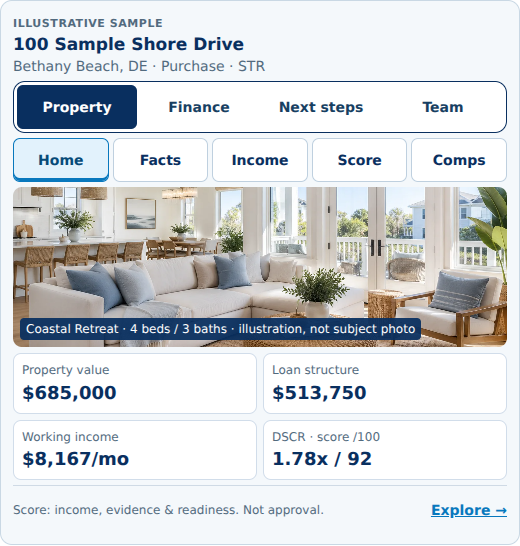
Review available rental-market evidence, test income assumptions and understand estimated debt coverage. Compare the income you expect with the income needed for the proposed financing.
Data coverage varies by market and property. This STR research example does not demonstrate integrations with every booking platform.
Understand financing structuresCompare down payment, estimated payment, cash needed at closing, reserves and required rental income.
Plan your first rental purchaseCompare your existing loan with a potential replacement, including closing costs and existing prepayment obligations.
Review refinance considerationsConsider proceeds, retained equity, debt payments and cash flow before committing capital to another purchase.
Review portfolio decisionsCompare the tradeoffs
Compare available down payments, leverage, preliminary rates, points and prepayment structures. A lower payment may require more cash up front; lower initial costs may come with another tradeoff.
Save an option alongside the property so a reviewer can see your assumptions.
Check RatesFor an existing rental, organize records by property and period. Reconcile revenue across channels so the same booking is not counted twice.
Start with available market evidence and clearly labeled projections. Include occupancy, pricing, expense and permitted-use assumptions.
The lender determines accepted evidence and qualifying income. A projected result does not establish eligibility.
DSCR compares qualifying income with the lender-defined payment obligation. Your operating cash flow also depends on management, utilities, maintenance, vacancy and other costs.
Understand the termsSave your analysis and preferred financing option first. Our team can review the package, identify missing information and discuss eligible next steps.
Choose purchase or refinance, then review property income and financing assumptions.
See the decision processOrganize income evidence, ownership details and relevant loan information.
Review shared ownershipAsk the team to assess the package before moving into an application and secure document process.
See how human review worksNo. Eligibility depends on property use, income evidence, borrower profile, ownership, location and lender requirements.
Organize the records for review, avoid duplicate revenue and explain discrepancies. The lender determines accepted evidence and adjustments.
Some programs may consider approved rental-income or market-rent evidence. Availability and calculation methods vary. Platform projections remain preliminary planning information.
This page does not promise a booking-account integration. Use available property research and organize supporting records for review. Confirm any connection in the application before relying on it.
STR Advisory is independent of Airbnb, Vrbo, Booking.com and Furnished Finder. Their names identify rental channels and do not imply sponsorship, endorsement or a lending partnership.
Evaluate the property, understand the financing tradeoffs, and save a package you can review with confidence.
Preliminary estimates only. Financing is subject to underwriting, property and borrower eligibility, lender requirements and applicable state availability. Business-purpose financing is for eligible investment properties. Rental income, qualification and loan terms are not guaranteed.

